The Marrakesh Jacket — Marina Anouilh's Bohemian Chic Signature
If a single piece had to represent Marina Anouilh, it would be the Marrakesh jacket. Hand-embroidered in Morocco. Woven from recycled cotton. Trimmed in sabra — the so-called Moroccan cactus silk, extracted from agave leaves and woven in the Atlas Mountains. Lined for structure, sized for ease, designed to be worn open or belted. The Marrakesh jacket has anchored the boutique's identity since 2012, and across more than a decade it has come to define what bohemian chic outerwear can be when it is made by hand, in named ateliers, from materials with stories. This is the complete guide to the Marrakesh jacket family — the herringbone cotton, the corduroy, the denim variations — the way it is made, the way it is worn, and the way it has shaped the bohemian chic register at Marina Anouilh.

What the Marrakesh jacket is
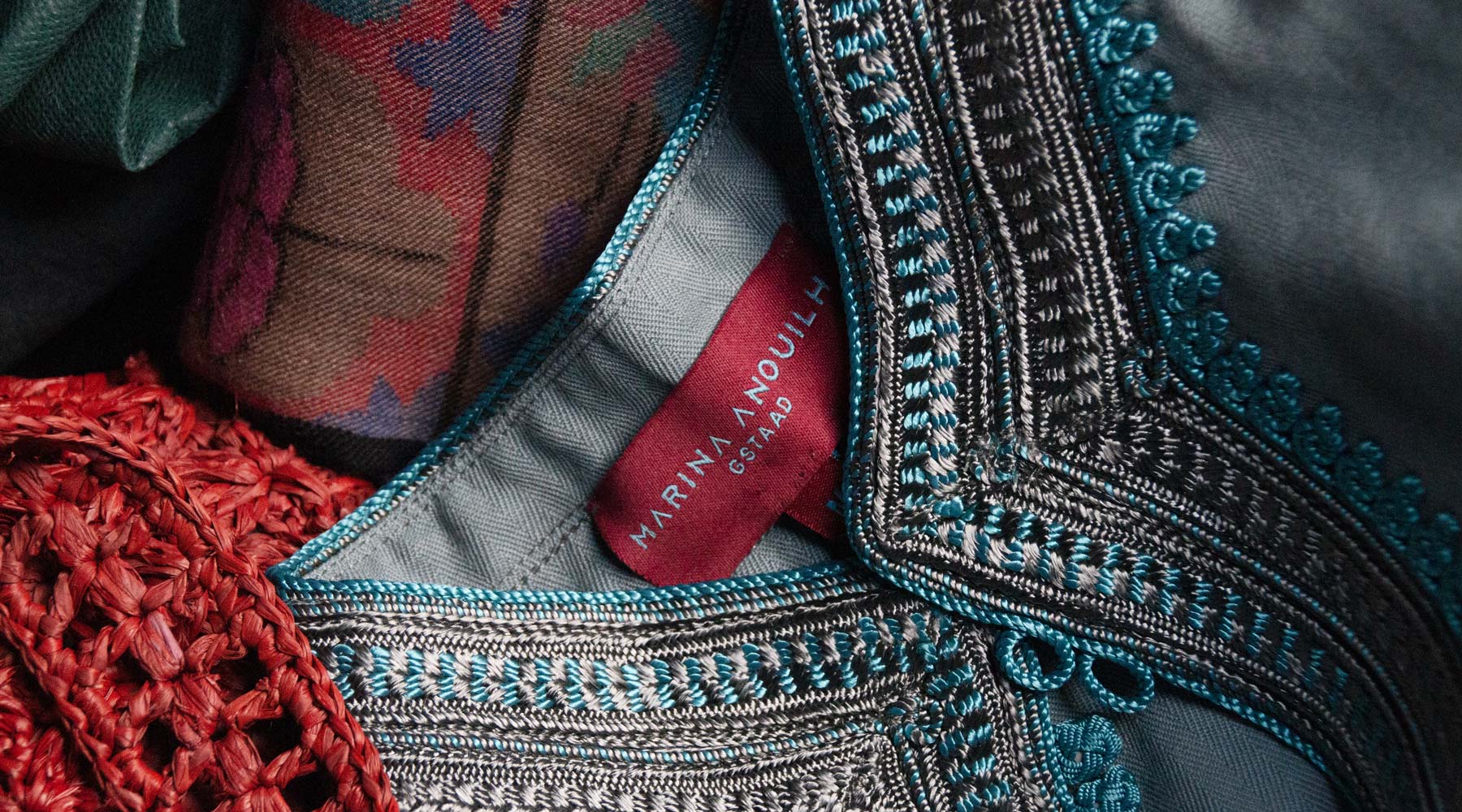
At its core, the Marrakesh jacket is a hand-embroidered outer layer cut in a relaxed bohemian silhouette, finished with sabra trim along the front placket, collar, and sometimes the hem. The base fabric varies — cotton herringbone, corduroy, denim, lighter cotton for summer — but the construction principle stays the same: hand work, natural materials, generous cut, intentional restraint.
Every Marrakesh jacket is sewn and embroidered in a small atelier on the outskirts of Marrakesh, Morocco. The atelier has been working with Marina since the early 2010s. The team there — mostly women, multi-generational — produce small batches of jackets in colors Marina selects two seasons ahead. No two jackets are exactly alike. The sabra trim, in particular, dyes slightly differently from batch to batch because the agave fibre takes natural pigments unevenly. That irregularity is the whole point.
The Marrakesh jacket family
Marrakesh Herringbone Cotton Jacket
The lightest version, designed for spring and shoulder season. Woven from recycled cotton in a fine herringbone weave, with sabra trim in contrast colours. Available in beige, tobacco, and grey blue as seen in our section 'Marrakesh Accents'. Cut to fall just below the hip, with a small standing collar and two patch pockets at the side. Worn open over a silk shirt and linen culottes, or belted with a wide Moroccan leather belt for structure.
Marrakesh Corduroy Jacket
The mid-weight version, designed for autumn and mild winter. The Marrakesh Corduroy Jacket in beige/bordeaux and the kaki turquoise variation are the most-worn pieces in Marina's own autumn rotation. Softer than wool, warmer than the herringbone cotton, with the same sabra trim and embroidery details. Pairs particularly well with cashmere knits, wool culottes, and tall leather boots.
Marrakesh Denim Jacket
The most casual version of the family, in indigo or washed denim with gold sabra trim. Worn over a silk shirt and dark jeans, or over a kaftan dress for unexpected contrast. Particularly popular among younger clients (35-45) who want the Marrakesh embroidery in a more contemporary register.
Marrakesh Velvet Jacket
A winter and ceremony variation. Cut in cotton velvet, hand-embroidered in tonal threads, with sabra trim. The velvet version is the most formal of the family — worn over silk dresses for evening events, or over wool trousers for the alpine winter dinners that define Marina Anouilh's St Moritz wardrobe.

The making — from Marrakesh atelier to boutique
Each Marrakesh jacket follows a process that has not fundamentally changed in over a decade.
- Fabric sourcing. The base cottons are woven in family mills outside Marrakesh from recycled fibres. The corduroys and velvets come from European mills (Italy and France). The denim is sourced from Tunisia and Morocco.
- Pattern cutting. Each season Marina works with the atelier on pattern adjustments — a slightly different shoulder, a wider sleeve, a longer hem — to keep the jacket evolving without breaking its core identity.
- Construction. The jacket is sewn by hand in small batches — typically 20 to 40 pieces per colourway per season. The seams are double-stitched for longevity. The lining is cotton, breathable.
- Embroidery. Hand-embroidered detail on collar, front placket, and sometimes sleeves. The embroidery patterns are inspired by traditional Berber motifs but adapted for a contemporary cut.
- Sabra trim. The sabra silk — hand-extracted from agave leaves, hand-dyed with natural pigments, hand-woven on traditional looms in the Atlas Mountains — is applied along the front placket, the collar, and sometimes the hem. This is the step that gives the jacket its visible craft signature.
- Quality check and shipment. Every jacket is checked by hand at the atelier and again at the boutique. We reject pieces with visible flaws.
The full production cycle from fabric to boutique floor is approximately 14 to 18 weeks. Each jacket carries the marks of more than a dozen pairs of hands.

How Marina wears the Marrakesh jacket
Day, casual
The herringbone cotton Marrakesh in beige, worn open over a Holly silk shirt in cherry and dark denim. The Tiana raffia bag. Worn boutique-floor in summer Gstaad. The jacket reads as polished without being formal.
Day, polished
The Marrakesh Corduroy in bordeaux, worn belted over an Olympia Fuji Kaftan in olive. Tall leather boots. A Sophie Digard crochet scarf in rust. Boutique-floor in autumn or transitional Geneva.
Evening, casual
The Marrakesh Denim Jacket open over a Lotus Silk Dress in plum. Low metallic sandals. The Olivia Dar pouch. An indoor restaurant dinner in late spring or early autumn.
Evening, dressed
The Marrakesh Velvet Jacket over a Britania tiedye silk dress. Lined silk culottes underneath. Tall heeled boots. A winter ceremony dinner in Gstaad or St Moritz.

Why the Marrakesh jacket has lasted
Most fashion pieces have a one-season life. A Marrakesh jacket has a twenty-season life. The reasons explain a great deal about what Marina Anouilh tries to do as a boutique.
First, the materials are real. Recycled cotton, agave-fibre sabra, natural dyes. Nothing about the jacket is synthetic or trend-cycle. The colours age into something more interesting; the fabric wears in rather than wears out.
Second, the cut is forgiving and timeless. The relaxed silhouette accommodates body changes across a decade — weight, posture, pregnancy, post-partum, ageing. The proportions are not tied to any single season's silhouette trend.
Third, the handcraft is visible. The slight irregularities of hand-embroidery and hand-dyed sabra are what date well. Machine-made fashion ages by becoming dated; hand-made fashion ages by becoming patinated. The Marrakesh jacket at year ten looks like an heirloom.
Fourth, the colour palette is anchor. Beige, tobacco, bordeaux, terracotta, olive — these are colours that survive every shift in fashion's broader palette because they were never trend colours to begin with.
The Marrakesh jacket in the broader Marina Anouilh wardrobe
The jacket pairs across the entire boutique offering. Specifically:
- Over the Lotus silk dress — the most photographed Marrakesh combination.
- Over the Olympia Fuji Kaftan for autumn boutique days.
- Over the Holly habotai silk shirt for layered office or city looks.
- Under the Stephanie Yak Coat in deep winter as additional warmth layer.
- With Marrakesh ballet flats by Meher Kakalia for a head-to-toe Marrakesh story.
FAQ — the Marrakesh jacket
How do I care for the Marrakesh jacket?
Dry-clean once per year only. Spot-clean between cleanings with a damp cloth. The sabra trim is delicate — do not iron directly on it. Store on a wide hanger to maintain shoulder shape.
What size should I take?
The jackets are cut generously. Your usual size will fit comfortably for layering. Size down only if you specifically want a fitted look (rare in bohemian chic).
Are the embroidery details unique?
Yes. Each piece is hand-embroidered. The pattern is consistent within a colourway but the execution varies slightly piece to piece — stitch density, thread tension, individual hand. That is part of the value.
Can I order a Marrakesh jacket made-to-measure?
Yes. For custom colourways or specific fit adjustments, the atelier can produce made-to-measure Marrakesh jackets with a 10-to-12-week lead time. Book a personal appointment to discuss.
What is the sabra trim made of, exactly?
Sabra is sometimes called "Moroccan silk" or "cactus silk", but it is neither silk nor strictly cactus. The fibre comes from the leaves of the agave plant (often translated locally as "cactus"). The leaves are crushed, the fibres extracted, dried, dyed with natural pigments, and woven on traditional looms. The result is a fabric with the lustre of silk, the strength of cotton, and a slightly irregular handmade texture.
How long does the Marrakesh jacket last?
If maintained properly: fifteen to twenty years. We have clients still wearing the jackets they bought in 2014. The fabric softens, the colour deepens, the embroidery holds.
Closing
The Marrakesh jacket is the piece that, more than any other, explains what bohemian chic at Marina Anouilh actually is: made by hand in named places, from materials with stories, in cuts that age beautifully, in colours that anchor a wardrobe. Owning one is the most natural way to begin a Marina Anouilh wardrobe. After more than a decade of seeing the same pieces come back season after season, on the same women, in the same boutiques — we still recommend the Marrakesh jacket as the single best first purchase.
Browse the Marrakesh Accents collection, see the complete Bohemian Chic edit, or book a personal appointment at our Gstaad or St Moritz boutiques to try the Marrakesh jacket in person.