Bohemian Chic Colour Stories — The Marina Anouilh Palette

A bohemian chic wardrobe is recognisable by colour before it is recognisable by silhouette. The palette is narrow on purpose. After fourteen years of building the wardrobe at the boutique, here is the colour vocabulary, the rules that make each piece work against the next, and the small adjustments that turn a generic outfit into a coherent bohemian chic look. This is the complete colour guide: the anchor palette, the accent jewel tones, the rules of combination, the seasonal shifts, and the colour stories that distinguish a Marina Anouilh wardrobe from generic luxury contemporary.
The anchor palette — earth tones
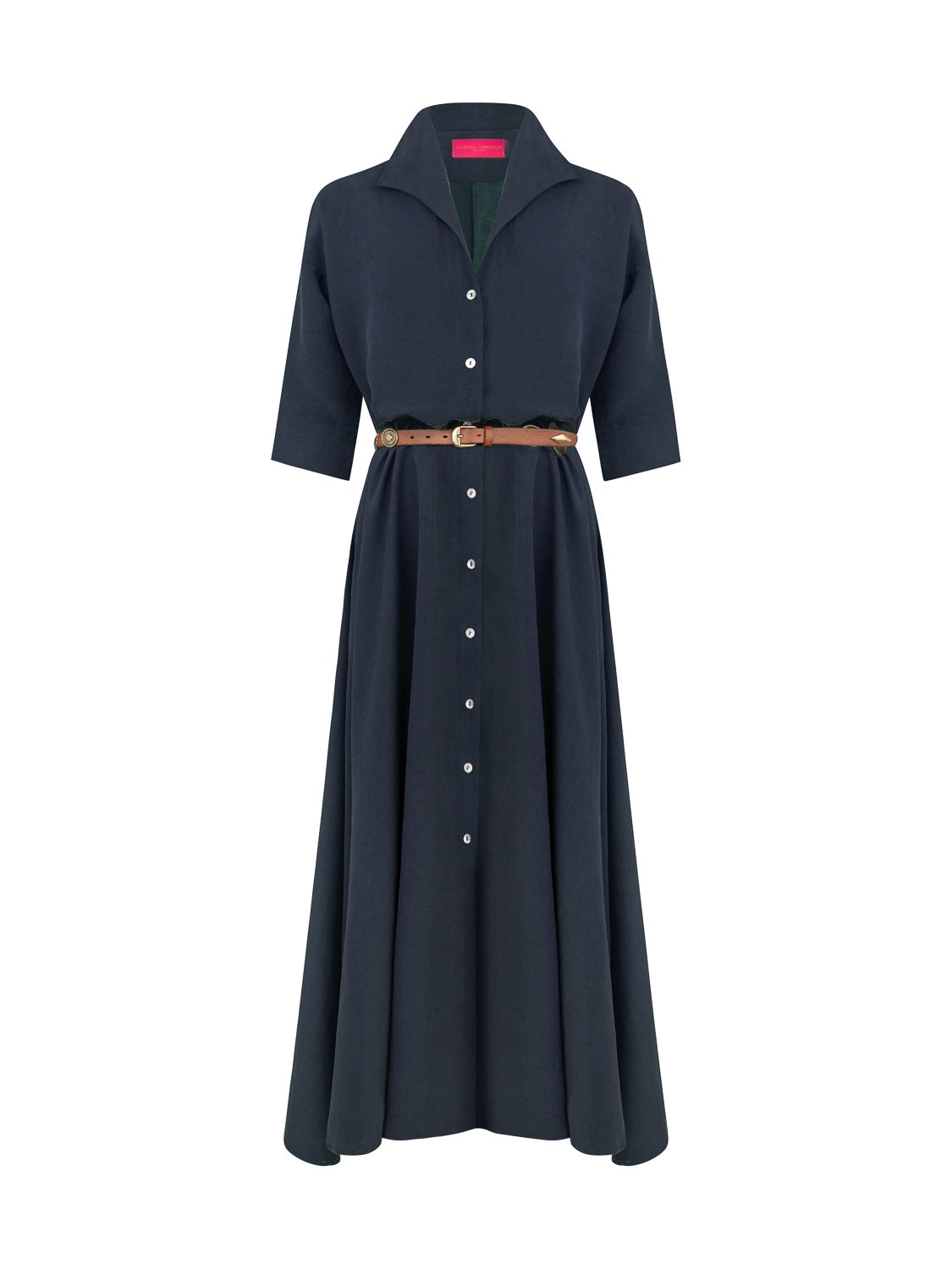
Cream, beige, taupe, tobacco, olive, navy, bordeaux, rust. These are the colours of the bohemian chic wardrobe's structural pieces — the coats, jackets, trousers, kaftans. They live across decades. They photograph well in any light. They pair with each other almost without thought.
Each anchor colour serves a specific role:
- Cream — the lightest anchor, used as connector or base for layered outfits. Silk shirts, linen culottes, summer kaftans.
- Beige and taupe — the foundation neutrals, especially in winter outerwear. The Stephanie yak coat in taupe is the canonical example.
- Tobacco and rust — the warm-toned mid-range, used in autumn pieces and warmer-light contexts.
- Olive — the green that flatters most skin tones; the Holly silk shirt in olive is one of the most-photographed pieces in our boutique.
- Navy — the deepest anchor, used in wool culottes, the Stephanie yak coat (navy variant), and silk dresses for indoor evening events.
- Bordeaux — the burgundy that runs through our autumn wardrobe, from velvet trousers to embroidered outerwear; see the Luisa velvet trousers in bordeaux.
The Stephanie yak coat in taupe and the Marrakesh corduroy jacket are the two foundational pieces. From those two colours, an entire winter wardrobe can be built. Add cream silk shirts, olive culottes, navy trousers, and you have a complete bohemian chic colour foundation that survives any season.
The accent — silk in jewel tones
One bohemian chic outfit is allowed one piece of strong colour, and that piece is almost always silk. The colour rule comes from a practical observation: silk takes saturated colour better than any other natural fibre. It holds the hue, reflects light, ages without dulling. A cherry silk shirt photographed in 1975 still reads cherry today; a cherry cotton or polyester shirt would have faded long ago.
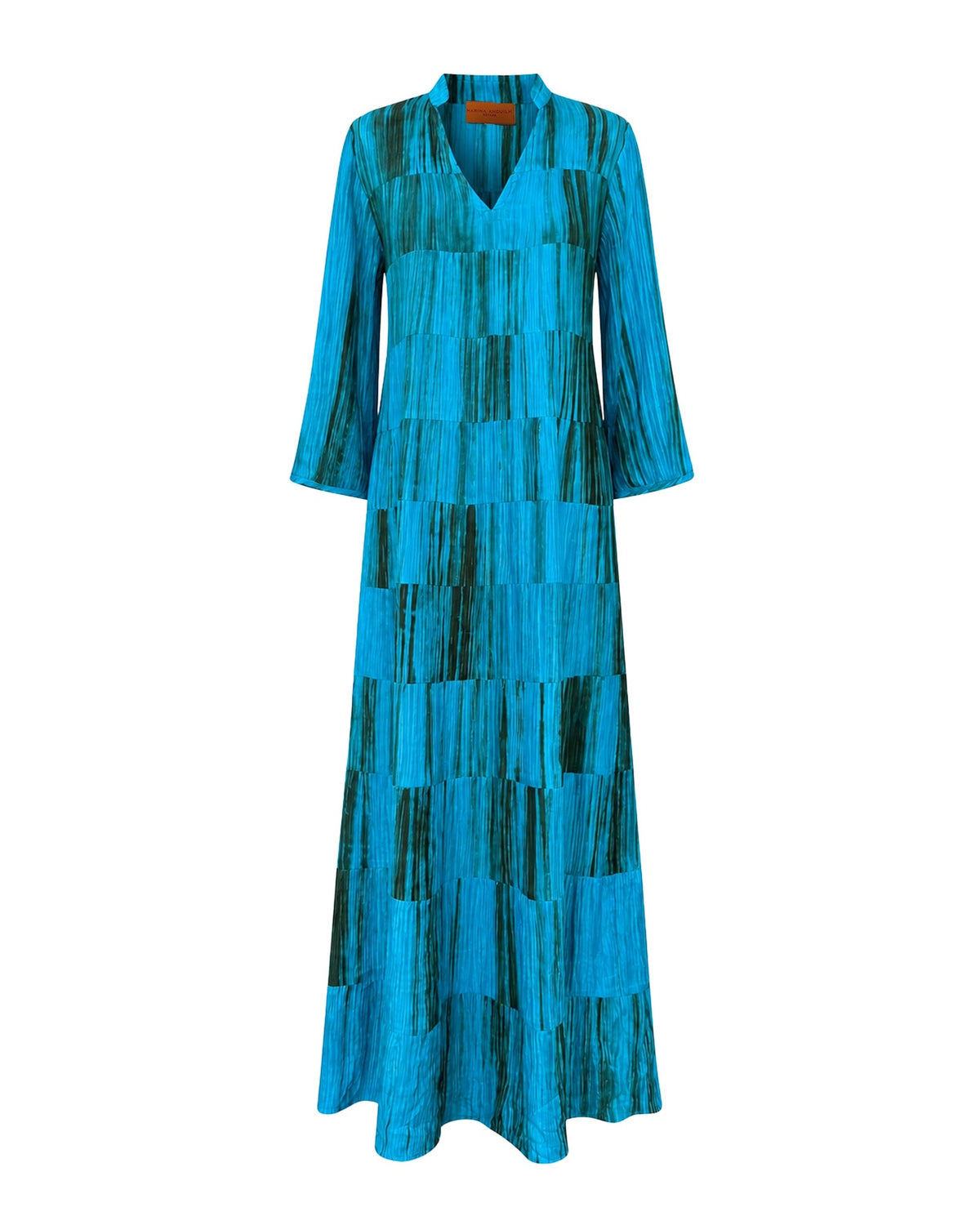
The Holly silk shirts in cherry, cyan, and olive are the canonical accent layer. The Lotus silk dress in plain orange. The Perrine in navy or rust. The Britania in tiedye cyan and olive (the rare permitted two-colour silk).
The rule for accent colour:
- One accent piece per outfit. Two accent silk pieces in the same outfit (a cherry shirt and a plum dress, for example) tips the look into competing colours.
- The accent is silk. The same colour in cotton or linen reads as costume; in silk it reads as luxury.
- The rest of the outfit stays anchor-toned. Cream culottes, taupe coat, olive accessories — the silk does the colour work alone.

The pattern — tiedye, embroidery, Suzani
Bohemian chic accepts pattern, but in small quantities and from specific traditions. The Britania silk dress in tiedye cyan and olive is the most pattern-dense piece in the wardrobe. The Suzani-embroidered Gaia jacket brings a different kind of decoration — hand-stitched, structural, three-colour. The hand-embroidered floral on the Gaia linen jacket in coral is the smallest unit of bohemian chic pattern.
The rule: one patterned piece per outfit, never two. The pattern is the focal point. Everything else must be solid. A tiedye dress with embroidered earrings is fine because earrings are a small visual unit. A tiedye dress with a Suzani jacket is too much because both patterns compete for attention.
What patterns are permitted:
- Tiedye (hand-dyed, never printed) — the most accepted bohemian chic pattern
- Hand-embroidery (Suzani, floral, geometric) — the most considered pattern, often with cultural provenance
- Ombré (hand-dyed colour transitions, as in the Artemis) — a subtle pattern that reads as colour story
- Tartan (wool only, alpine context) — the only printed-or-woven pattern that the register accepts in outerwear
What patterns are not permitted:
- Animal prints (leopard, zebra, snake) — belong to a different register
- Geometric prints on cotton (polka dots, stripes, gingham) — read as casualwear, not bohemian chic
- Logo prints — absolutely incompatible with the register
- Floral prints on machine-printed cotton — read as boho chic, not bohemian chic
The neutral — white and cream
White and cream sit between anchor and accent in a bohemian chic wardrobe. They are the connectors. A cream Holly silk shirt under a taupe Stephanie coat with cream linen culottes — a complete outfit in a single colour family, lifted by texture rather than contrast. The Laura cream Indira kaftan works the same way: a cream base with Suzani embroidery as the entire colour story.
The distinction between white and cream matters in the bohemian chic register:
- Pure white — used rarely, in summer linen, for the most luxurious contexts. Reads slightly clinical against most contexts.
- Cream — the substitute for white. Warmer, more forgiving, photographs better in natural light.
- Oat — slightly more yellow than cream, warmer still. Common in summer kaftans.
- Sand — darker than oat, lighter than beige. Beach and Mediterranean contexts.
- Ivory — the most luxurious of the white-adjacent tones; reserved for ceremony silk.

The metallic — used sparingly
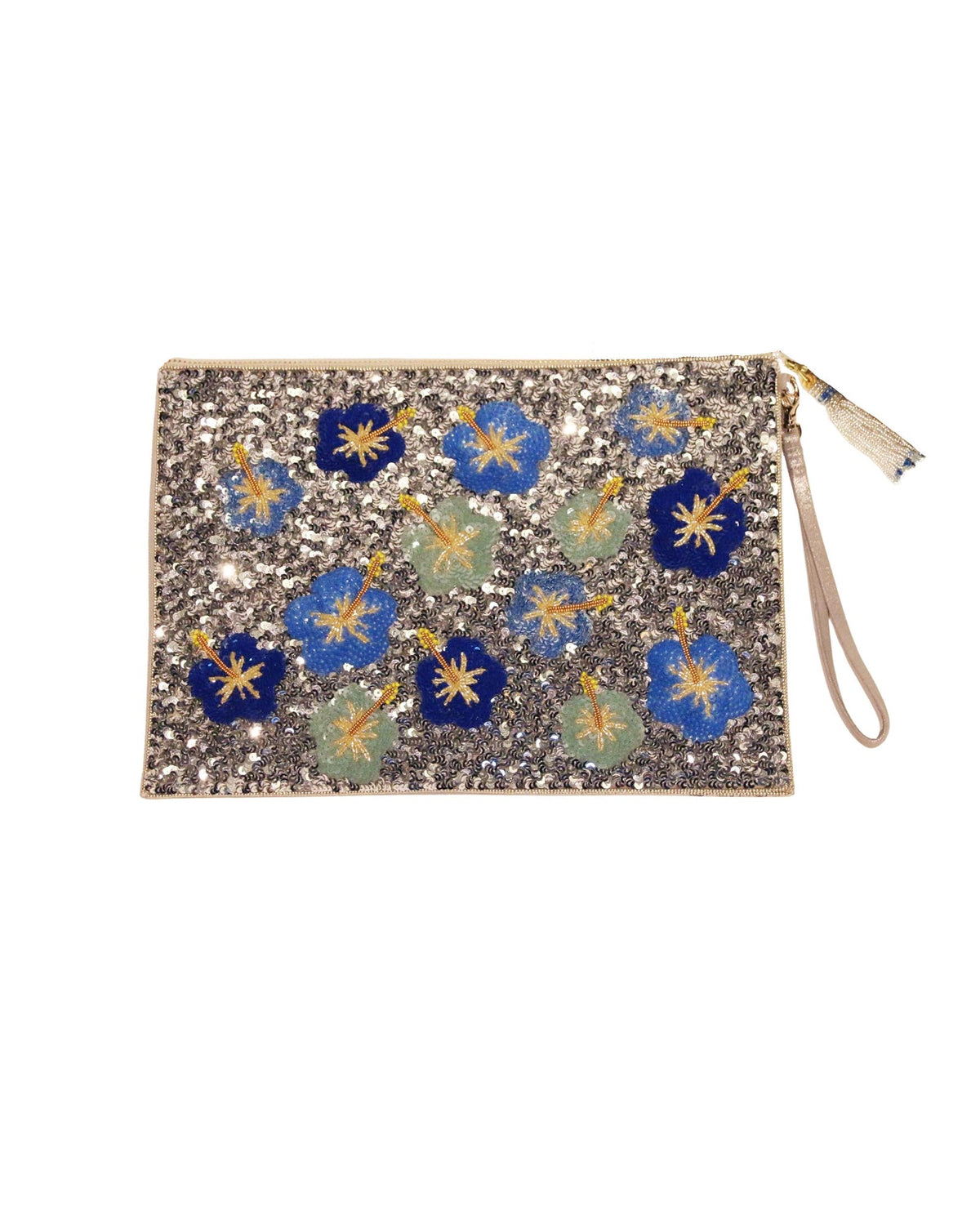
Sequin, gold, silver are bohemian chic for evening only. The Olivia Dar sequin pouches are the clearest example. Worn with a Lotus silk dress in plain orange, the sequin reads as quiet luxury. Worn with a printed dress, it reads as too much. Worn during daytime, it reads as costume.
The metallic rule:
- Evening contexts only — after 6 p.m., for dinner, ceremony, formal events
- One metallic element per outfit — the sequin bag OR the metallic sandal, never both
- Warm metallics — gold, bronze, copper read more bohemian chic than silver, which reads more pure-minimalist
- Hardware should be brass or gold-toned — belt buckles, bag clasps, jewellery clasps
The rule of three
A bohemian chic outfit uses no more than three colours visible at once. Yak coat (taupe), silk shirt (cherry), raffia bag (almond) — three. Add a fourth (a navy culotte underneath) and the eye starts working too hard.
This is not arbitrary — it is how the wardrobe was photographed in the 1970s by the photographers who defined the register (Penn, Avedon, Newton), and the visual rule has held since. Editorial photography rewards limited palettes; bohemian chic absorbed this rule from its photographic origins.
The rule of three in practice:
- Count the colours visible from a normal viewing distance — not from a microscope.
- Anchor neutrals can blend (cream-taupe-olive counts as two colour families).
- Patterns count as their dominant colour (a tiedye in cyan and olive counts as one colour story).
- Hardware and accents do not count (gold buckle on a taupe belt is invisible to the rule).
The seasonal colour shifts
Spring (March-May)
The palette warms from winter darkness. Cream returns as the foundation. Cherry and cyan silks emerge from the wardrobe. Olive joins as the connecting green. Bordeaux and rust recede until October. The Gaia linen jacket in coral makes its spring debut.
Summer (June-August)
The palette peaks at warmth. Cream, oat, sand as foundation. The jewel-tone silks (cherry, cyan, plum, orange) at maximum saturation. The Britania tiedye reaches its photogenic peak in golden hour. Natural raffia becomes the bag colour of choice.
Autumn (September-November)
The palette deepens. Bordeaux and rust take over from cherry. Olive deepens to dark olive. Taupe and tobacco re-enter from the cooler-weather wardrobe. The Marrakesh corduroy in bordeaux makes its annual return. The raffia bag retires until May.
Winter (December-February)
The palette anchors at deepest. Taupe and navy as the primary outerwear colours. Bordeaux, plum, rust for indoor evening. The Stephanie yak coat in taupe dominates the alpine wardrobe. Black appears occasionally for evening but never as a full outfit.
What to avoid
Fluorescents. Neons. Synthetic pastels. Black-and-white prints. Logo prints. Most prints with more than three colours. Highly saturated primary colours (pure red, pure blue, pure yellow) outside of silk.
None of these are wrong colours in general fashion — they are wrong colours for bohemian chic specifically. The register has a narrow palette by design. Stepping outside it tips the outfit into a different register entirely.
Building from one colour
If you want to start a bohemian chic wardrobe and don't know where to begin, choose one colour and build outward. Most of our clients start with taupe or cream as their base, then add a single jewel-tone silk shirt, then a second neutral. From three colours you can build outwards for years without conflict.
Recommended starting colour stories:
- Taupe-cream-cherry: a warm-leaning palette with one bright silk note. Anchored by the Stephanie yak coat and the Holly cherry silk shirt.
- Navy-cream-cyan: a cool-leaning palette. Anchored by wool culottes in navy and the Holly cyan silk shirt.
- Bordeaux-olive-orange: an autumn-warm palette. Anchored by the Marrakesh corduroy in bordeaux and the Lotus silk dress in orange.
- Ivory-taupe-plum: a ceremony-leaning palette. Anchored by the Lotus in ivory and the Stephanie yak in taupe.
From any of these three-colour starts, the wardrobe builds itself over years — each new piece in either an anchor neutral or a single accent jewel tone, each fitting into the existing visual story.
FAQ — bohemian chic colour
Can I wear pink in bohemian chic?
Yes, but only in silk and only at certain saturations. Cherry pink (slightly red-leaning) works. Bubblegum pink does not. The Artemis Ombré dress includes a plum-pink transition that reads bohemian chic; a solid hot pink dress would not.
What about red?
Cherry red in silk (Holly) and rust red in autumn pieces (Marrakesh corduroy). Pure primary red is rare and only works for ceremony silk pieces.
Is there a bohemian chic green?
Several. Olive is the anchor green. Dark olive emerges in autumn. Cyan (blue-leaning green) appears in silk. Sage and moss in cooler-tone outfits. Tarragon green in the Moroccan belts. Each occupies a specific seasonal slot.
Why no patterned cotton?
Machine-printed cotton tips the look into either casualwear or boho chic. The bohemian chic register accepts pattern only in hand-dyed silk (tiedye), hand-embroidered fabric (Suzani), or hand-dyed transitions (ombré).
Do these colour rules apply to accessories?
Yes — but accessories get more latitude. The Olivia Dar sequin pouches in deep red, plum, gold all work within the register. The Tiana raffia bags in natural-dyed almond, chestnut, and natural all anchor the wardrobe.
Closing
The bohemian chic colour palette is narrow by design. The narrowness is what allows the wardrobe to age across decades — pieces bought in 2024 still pair with pieces bought in 2034 because both fit within the same anchored vocabulary. The wider the palette, the faster the wardrobe goes out of phase with itself. Marina Anouilh's palette has not meaningfully shifted in fifteen years; the boutique still operates from cream, taupe, olive, bordeaux, navy, with jewel-tone silks as accents. Long after Quiet Boho has been renamed, this palette will still be the bohemian chic foundation.
Browse the Bohemian Chic collection, read our complete bohemian chic style guide, or book a personal appointment to develop your own colour palette in person.
Continue reading — the bohemian chic edit
If this guide is useful, the rest of the cluster goes deeper on related questions: how Marina wears the style, the craft behind it, the fabric glossary, and the seasonal edits.
- the craft behind bohemian chic
- bohemian chic evening dressing
- bohemian chic in summer
- the colour palette
- quiet boho 2026
You can also browse the full bohemian chic collection, or book an in-store appointment at our Gstaad or St Moritz boutiques to be styled in person.