Bohemian Chic — A Modern Guide by Marina Anouilh

What people call "bohemian chic" today carries the weight of two centuries. From the 19th-century artists who first named themselves bohème, through the festival fringe of the 1970s, to the curated, quieter version that has taken over the runways and the streets in 2026 — bohemian chic has evolved into something more grounded, more handcrafted, more lived-in. This is Marina Anouilh's guide to it.
Table of contents
- What "bohemian chic" really means in 2026
- A short history — from bohème Paris to neo-boho
- The five pillars of bohemian chic
- The materials that define it
- How to wear bohemian chic — by season
- The Marina Anouilh edit
- Bohemian chic for special occasions
- Where to find authentic bohemian chic in Switzerland
- Frequently asked questions
- What makes Marina Anouilh's interpretation different
1. What "bohemian chic" really means in 2026
For most of the 21st century, "bohemian chic" was synonymous with Coachella. Fringe vests, layered necklaces, floppy hats, embroidered shorts. The image stuck — but the style has moved on.
In 2026, fashion editors describe the new wave as "bohemian minimalism" or "quiet boho". Less festival, more city summer. Less maximalism, more curation. The references are still there — Moroccan embroidery, Mongolian textiles, Indian craft, Mediterranean breeze — but they are filtered through a lens of restraint. One piece per outfit, not five. Natural fabrics, not synthetic. Pieces that improve with time, not trends that expire in a season.
At Marina Anouilh, this is the version of bohemian chic we curate. It is bohemian in spirit — handcrafted, eclectic, expressive — and chic in execution: clean cuts, refined fabrics, considered details. It is the wardrobe of women who have moved past the costume and are now wearing the style as their own.
2. A short history — from bohème Paris to neo-boho
The word "bohemian" first appeared in 19th-century Paris, used by sophisticated Parisians to describe the wandering artists, poets, and musicians who lived outside the conventional bourgeoisie. Their wardrobes were the first bohème: loose blouses, embroidered jackets, fringed shawls — clothes that signalled creativity, freedom, and a refusal to conform.
By the late 19th century, Jane Morris, model and muse of the Pre-Raphaelite painter Dante Gabriel Rossetti, became the first true bohemian-chic icon. She rejected the corsets of Victorian fashion in favour of loose, hand-embroidered dresses, draped fabrics, and natural hair. The aesthetic she invented would influence Art Nouveau, then Art Deco, then ripple forward into the 20th century.
The 1960s and 70s were the second great wave. Hippies rejected furs and synthetic fabrics, embraced denim, layered Indian prints, brought back the maxi skirt and the peasant blouse. By the 2000s, fashion designers from Christophe Sauvat (co-founder of Antik Batik) to Chloé and Isabel Marant were bringing the bohemian wardrobe back to luxury runways.
And in 2026, the cycle has turned again. Brands like Zimmermann, Doën, Altuzarra and Chloé are putting handcrafted bohemian elements — crochet, embroidery, sustainable natural fibres — at the centre of their collections. The maxi silhouette is back, but cut in refined fabrics. The fringe is gone, the openwork detailing has stayed. Bohemian minimalism has arrived.

3. The five pillars of bohemian chic
Behind every authentic bohemian chic look in 2026, there are five recurring elements. None on its own makes a piece bohemian. Together, they define the aesthetic.
Texture over print
The old version of boho relied heavily on prints — paisleys, florals, ethnic motifs. The 2026 version leans on texture: hand-embroidery on linen, woven raffia, hammered silk, ribbed cotton, slubby shantung. A single, well-made textured piece does more work than a busy print.
Handcraft is not optional
If a piece can be made by a machine, it is not bohemian chic. The visible mark of the maker — uneven embroidery, hand-knotted raffia, hand-dyed silk — is what separates this aesthetic from fast fashion's imitation. Every Marrakesh jacket in our boutique, for example, is hand-embroidered in Morocco; no two are exactly alike.

The right fabrics, in their unmistakable touch
Linen, silk, cotton, hemp, wool, raffia. Recycled when possible. Synthetic almost never. The hand of the fabric matters as much as the cut: a real Habotai silk drapes in a way no polyester can imitate; a yak wool coat is warmer and softer than cashmere, and entirely sustainable.
The silhouette: fluid, generous, unhurried
Bohemian chic does not constrain. The dresses fall in a straight line from shoulder to ankle. The jackets are cut wide enough to be belted or worn open. The skirts move when you walk. Fitted is reserved for one or two pieces per outfit — a knit top, a belt, a tailored coat — to anchor the looseness.
One craft piece, then quiet
The rule that distinguishes 2026 from 2010: one craft piece per outfit. An embroidered Marrakesh jacket over a clean white shirt and dark denim. A raffia Tiana bag with a plain Marina dress. A yak coat over a cashmere roll-neck. The craft pulls focus; everything else stays calm.
4. The materials that define bohemian chic
If you remember nothing else, remember the fabrics. They are the foundation.
| Material | Where you'll find it | Marina Anouilh examples |
|---|---|---|
| Linen | Summer dresses, shirts, jackets, kaftans | Marina Dress, Dassios shirts, Gaia jacket |
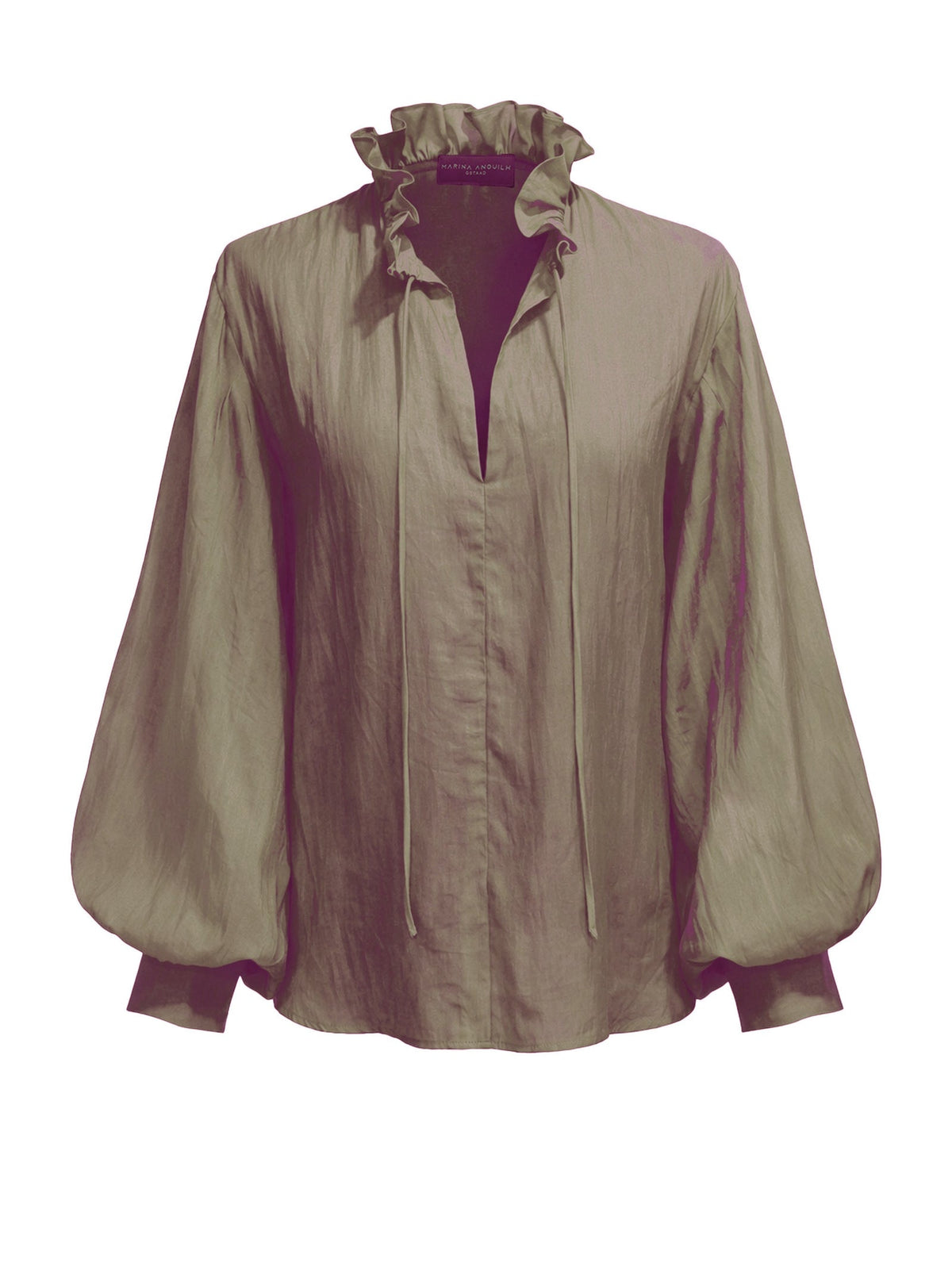
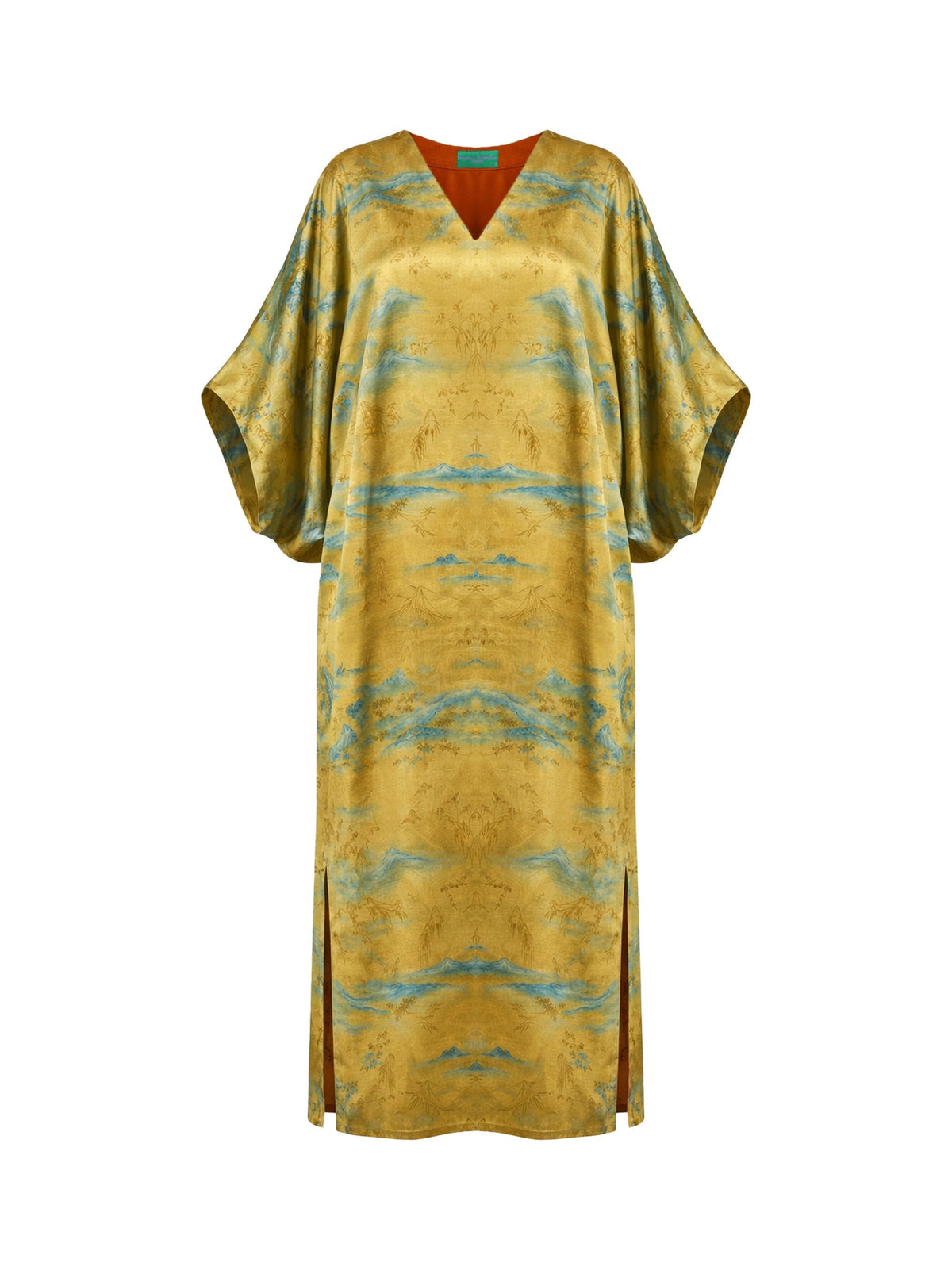
| Silk (Habotai, shantung, fluid) | Dresses, blouses, fluid skirts | Perrine, Holly, Irene, Britania, Lotus |
| Cotton (recycled, organic) | Marrakesh jackets, kaftans | Marrakesh Herringbone, Olympia kaftan |
| Hemp | Embroidered jackets, durable summer pieces | Geisha Hemp Jacket |
| Raffia | Bags, hats, summer accessories | Tiana raffia bags, Cape Verde and Madagascar hats |
| Yak wool (Mongolian) | Long coats, sweaters, winter layers | Stephanie Yak Coat |
| Cashmere (V-neck, fine) | Knits, T-shirts, cardigans | Indispensable cashmere series |
| Sabra (Moroccan vegetable silk) | Trim on the Marrakesh jackets | All Marrakesh signature pieces |
None of these are accidental choices. They are the result of more than fifteen years of Marina selecting ateliers and artisans across Morocco, Mongolia, India, Spain, France and Italy. The fabric tells you what kind of bohemian chic you are buying.

5. How to wear bohemian chic — by season
Spring & Summer
The summer wardrobe is where bohemian chic has the most natural home. A silk Lotus or Britania dress, a raffia bag, leather sandals or a Flabelus linen slipper, a wide Moroccan leather belt — and you are dressed for everything from a market morning in Geneva to a long lunch on the Riviera. For more details, read our companion guide Bohemian Chic for Summer — From Gstaad to the Riviera.

Autumn
Transitional season for bohemian layering. A Gaby velvet shirt over a fluid silk skirt, with a wool wide-leg trouser. A Marrakesh velvet jacket thrown over a cashmere roll-neck. The colours deepen — rust, plum, olive, terracotta — but the cuts stay fluid.

Winter
This is where Marina Anouilh's edit becomes distinctive. Alpine bohemian is a category we have built piece by piece in Gstaad over the years: yak wool coats, cashmere knits, embroidered vests, layered wool tartans. Anchor the look with the Stephanie Yak Coat. Read more in Bohemian Chic for Winter — Alpine Layers, Done Right.
Special occasions
Weddings, ceremonies, formal dinners — bohemian chic adapts beautifully. A silk shantung Irene skirt with a matching Holly blouse, or a made-to-measure Marina dress in a colour chosen with you. See Bohemian Chic for Evening.

6. The Marina Anouilh edit — what we curate
Two-thirds of the Marina Anouilh boutique is Marina's own line: pieces designed in Gstaad and produced in small batches in Europe, Morocco and Mongolia. The remaining third is a carefully selected edit of independent designers Marina has worked with for years:
- Christophe Sauvat — military jackets, embroidered patches, the original bohemian-chic atelier from France.
- Olivia Dar — hand-beaded clutches, sequined pouches, the most expressive accessories.
- Meher Kakalia — Mughal-technique ballet flats and mocassins, made by women artisans in India.
- BOSABO — Spanish hand-finished leather sandals.
- Sophie Digard — French crochet scarves and bags, every piece a singular textile artwork.
- Idarica Gazzoni — Italian-Indian kaftans with Mughal-inspired plastron embroidery.
- Babette Wassermann — knotted raffia bags from London.
- Tiana — handwoven raffia bags from Madagascar.
- Dassios — Greek linen shirts with hand-embroidered copper details.
Together, the Marina line and the curated designers form the Bohemian Chic collection — a wardrobe that travels from the Alps to the Mediterranean, from morning markets to evening dinners, without ever losing its quiet authority.

7. Bohemian chic for special occasions
One of the most common questions we receive in the boutique is: can bohemian chic work for a formal occasion?

The answer is yes — and in many cases, it is the most distinctive choice. A handmade silk shantung skirt with a delicate silk blouse will photograph more beautifully than a generic evening dress, and you will be the only one wearing it. The same applies to weddings, especially summer or destination weddings, where flowing silk and natural fibres are perfectly placed.
For very formal moments, Marina Anouilh offers made-to-measure ceremony dresses and jackets. Each piece is built in 4 to 6 weeks, in collaboration with you on fabric, colour and fit. To book a styling appointment for a made-to-measure brief, visit our appointment page.
8. Where to find authentic bohemian chic in Switzerland
Marina Anouilh operates three boutiques in Switzerland, each with its own atmosphere and edit:
- Gstaad — the original space, Promenade 6A. Visit Gstaad →
- St Moritz — the newest, Via Somplaz 1, opened 2025. Visit St Moritz →
If you would like Marina or one of her stylists to walk you through the collection in person — whether for an event, a wardrobe consultation, or a made-to-measure project — you can book a 45-minute styling appointment, free and with no obligation.
9. Frequently asked questions
Is bohemian chic the same as boho chic?
In practice, the two terms are used interchangeably. "Bohemian chic" tends to feel slightly more refined and editorial, while "boho chic" is more casual and Californian. Marina Anouilh tends to position closer to bohemian chic — the European, curated version.
Is bohemian chic appropriate for women over 40?
Yes — in fact, the 2026 version of bohemian chic is particularly well-suited to mature wardrobes. The fluid silhouettes are flattering, the natural fabrics are gentle, and the focus on craft means each piece is more interesting than a basic. See our dedicated guide on Bohemian Chic After 40.
What are the essential pieces to start a bohemian chic wardrobe?
Five pieces will take you a long way: a Marrakesh-style embroidered jacket, a fluid silk dress, a raffia bag, a wide leather belt, and a quality summer hat. From there, you can build seasonally with knits, kaftans, and accessories.
How do I avoid the "costume" effect?
By following the one-craft-piece rule. If you put on an embroidered jacket, keep the rest minimal: clean white shirt, dark jeans or a tailored trouser. Never wear three or more obviously bohemian pieces at the same time.
Is bohemian chic sustainable?
It can be, and at Marina Anouilh it is. Our garments are produced in small batches, by artisans, in natural and recycled fibres, designed to last decades. The cheapest piece you buy is the one you wear for twenty years.
What colours work best?
Earth tones (kaki, rust, olive, terracotta, ivory, sand) are the foundation. Soft jewel tones (cyan, fuchsia, plum, navy) work as accents. Marina rarely uses bright primary colours.
Can I wear bohemian chic to a wedding?
Absolutely. A silk shantung skirt with a Holly blouse, or a Marina-Anouilh-made-to-measure dress in a colour you have chosen, will be unforgettable. See our full bohemian chic wedding guide.
How long does a bohemian chic wardrobe last?
If maintained — hand-washed silks, brushed yak coats, raffia kept dry — a Marina Anouilh wardrobe lasts ten to twenty years. We see clients still wearing the Marrakesh jackets they bought in 2014.
Is bohemian chic suitable for the workplace?
Yes, with adjustments. Replace the kaftan with linen culottes or wool trousers. Keep the silk shirt. Skip the raffia in favour of a structured bag (leather, canvas). The Marrakesh Corduroy Jacket reads as a polished blazer alternative in any creative or executive environment.
What's the difference between bohemian chic and hippie chic?
Hippie chic carries the political and cultural ethos of the 1960s counter-culture — peace symbols, tie-dye as expression, layered fringe. Bohemian chic in 2026 has stripped most of that overt referencing. The materials remain (silk, embroidery, handcraft), but the politics have receded. Bohemian chic is closer to quiet luxury than to counter-culture.
10. What makes Marina Anouilh's interpretation different
Walk into any boutique that calls itself "bohemian" today and you will find a version of the look. What distinguishes Marina Anouilh's interpretation from the rest is the answer to three questions: where are the pieces made, by whom, and for whom.
Where: every Marrakesh jacket is hand-embroidered in Morocco. Every yak coat is woven from Mongolian undercoat. Every Tiana raffia bag is hand-woven in Madagascar. Every Suzani piece passes through embroiderers in Central Asia. We do not source from generic wholesale catalogues. We work with named ateliers, often the same ones year after year. Marina visits most of them annually.
By whom: the boutique has a name on it for a reason. Marina herself selects each piece, and each season's edit reflects her own wardrobe choices first. There is no buying team chasing a trend. There is a woman who has lived in Gstaad since 2008, dressed two generations of Swiss clients, and bought what she would wear herself. That visible point of view is the difference between a curated wardrobe and an algorithm-driven assortment.
For whom: bohemian chic at Marina Anouilh is not a costume for a holiday photograph. It is the wardrobe of women who live across multiple climates and multiple lives — a chalet in Gstaad, an apartment in Geneva, a summer house on the Mediterranean. The clothes are built for that real life: silk that survives an aeroplane, yak that compresses in a suitcase, raffia that travels by hand, a kaftan that handles both lunch and dinner.
This is what we mean by quiet luxury in the bohemian chic register. Less spectacle, more substance. Fewer pieces, longer ownership. The kind of wardrobe that gains weight the longer you have it.
Step inside the world of Marina Anouilh
Discover the bohemian chic edit in person — or browse the full curation online.
Browse the full Bohemian Chic collection or book a personal appointment.
Continue reading — the bohemian chic edit
If this guide is useful, the rest of the cluster goes deeper on related questions: how Marina wears the style, the craft behind it, the fabric glossary, and the seasonal edits.
- how Marina wears bohemian chic
- the craft behind bohemian chic
- bohemian chic vs boho chic
- fabric glossary
- bohemian chic icons
You can also browse the full bohemian chic collection, or book an in-store appointment at our Gstaad or St Moritz boutiques to be styled in person.