Bohemian Chic Layering — Geneva Spring to St Moritz Winter

The bohemian chic wardrobe has a hidden superpower most editorial photographs ignore: it layers beautifully. Living between Geneva, Gstaad, and St Moritz means dressing for at least three seasons in a single week. A March afternoon by the lake, a snowy evening at altitude, an April lunch on a sun-warmed terrace. The clothes Marina Anouilh selects are built for this rhythm. This is the complete layering guide — base layer to outer layer, accessory by accessory, geography by geography. The principles apply far beyond Switzerland but the wardrobe was built here, and that origin shows.
Why layering matters more in bohemian chic than elsewhere
Most luxury wardrobes are built for a single climate. Resort wear assumes warm. Alpine wear assumes cold. The bohemian chic register at Marina Anouilh assumes both, often within the same forty-eight hours. A flight from Gstaad to Saint-Tropez, a train from Geneva to Lake Como, a drive from St Moritz to Milan — these are real Marina Anouilh client itineraries, and the wardrobe has to handle the temperature swing without rotation.
The answer is layering. The clothes are designed to combine: a silk shirt that works alone in summer becomes a base layer in winter. A linen kaftan becomes a mid-layer over silk when it cools. A yak coat sits over everything. Each piece earns its place by combining with the others.
The base layer — silk on skin
Habotai silk is the bohemian chic base layer that nothing else replaces. The Holly silk shirt in cherry, cyan, or olive, sleeves loose, collar relaxed — worn alone in summer, layered under a wool coat in winter, knotted at the waist in spring. Silk regulates temperature better than synthetic blends and feels right against skin year-round.
Underneath, on the coldest days, we recommend a fine merino t-shirt (a quiet base, no pattern) — never a heavy cotton, which kills the drape of silk. The merino-silk pairing is the warmest base combination we know that still photographs as elegant under an outer coat.
The Holly silk shirt comes in three principal colourways for layering purposes: cherry for warmth and contrast (works against navy and taupe outer layers), cyan for cool contrast (works against bordeaux and olive), olive for unified earthy palette (works against taupe and cream). Owning all three means the base layer rotates while the rest of the wardrobe stays stable.


The mid layer — linen, cotton, hand-embroidery
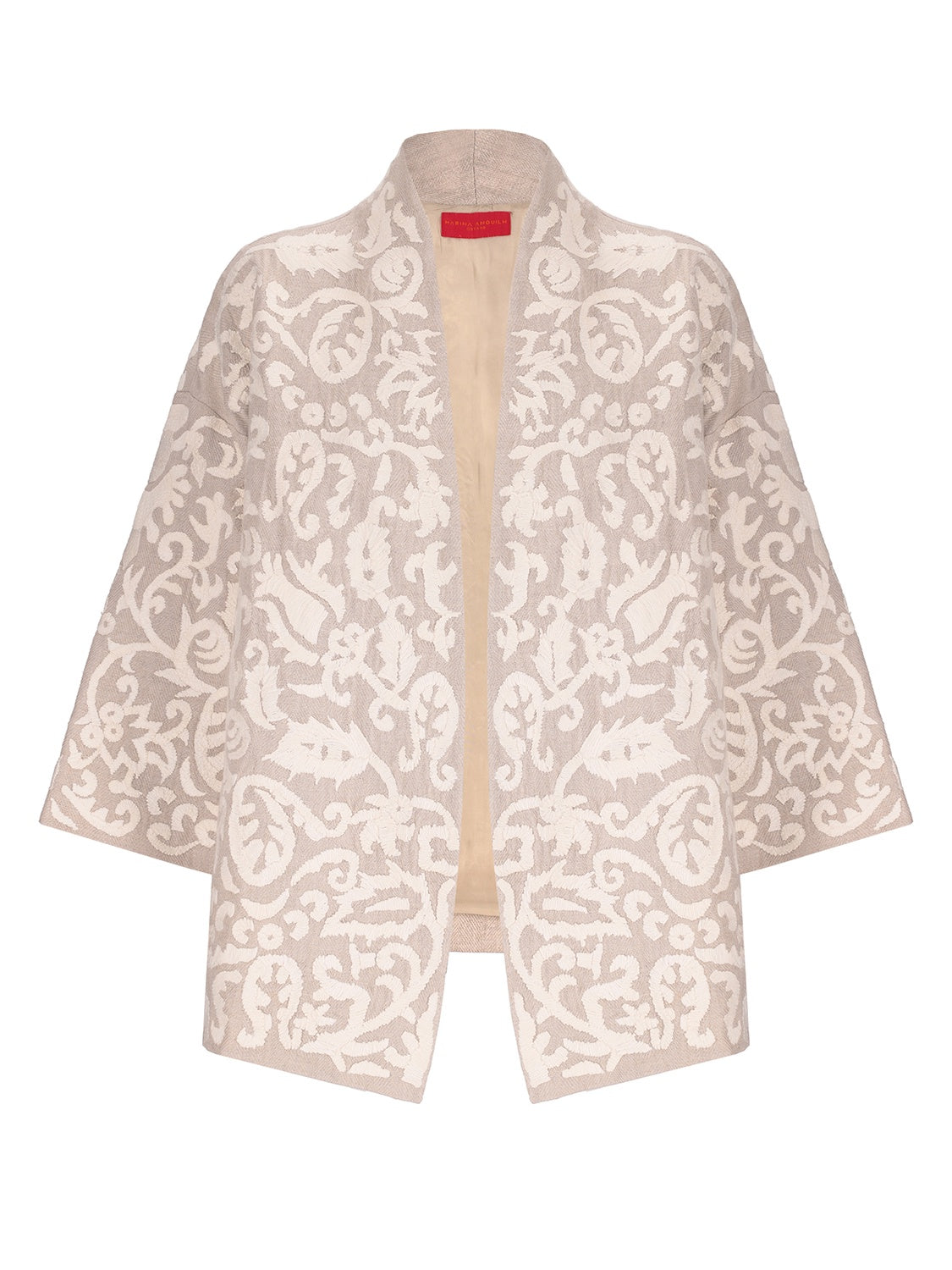
Spring and shoulder-season is where linen comes in. The Gaia linen jacket with coral embroidery is a quintessential mid-layer: enough texture and craft to carry the bohemian register, light enough to be worn over a silk shirt or directly over skin. The embroidery handles enough of the visual interest that the rest of the outfit can be plain.
The Marrakesh Corduroy Jacket is the cooler-weather mid-layer equivalent — softer than wool, warmer than linen, with the kind of muted colour palette (bordeaux, kaki turquoise) that pairs with anything underneath. The Marrakesh corduroy bridges autumn and mid-winter, sitting under the yak coat on the coldest days, sitting alone on warmer indoor afternoons.
For warmer mountain afternoons in late August, the Marrakesh Herringbone Cotton Jacket is the bohemian chic answer to the unstructured blazer — woven cotton with a sabra trim, breathable, packable, exactly the right weight for a Gstaad summer evening that cools after sunset.
Embroidered pieces like the Gaia Suzani jacket and the Laura Suzani-influenced kaftan function as mid-layers when worn open over a silk shirt. They are the pieces that carry the visible craft for the entire outfit — worn with restraint elsewhere, they become the focal point.
The outer layer — yak, wool, structure
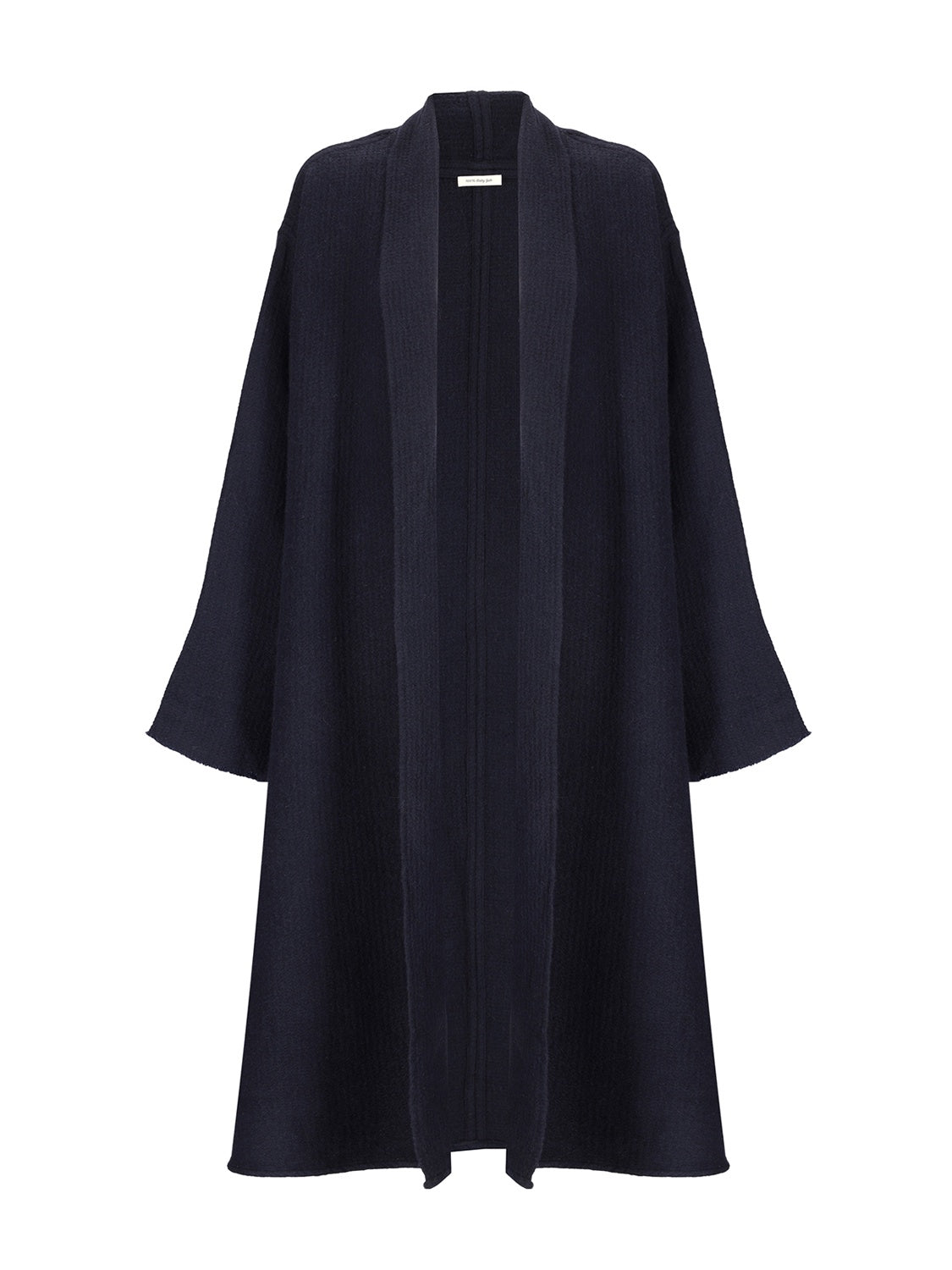
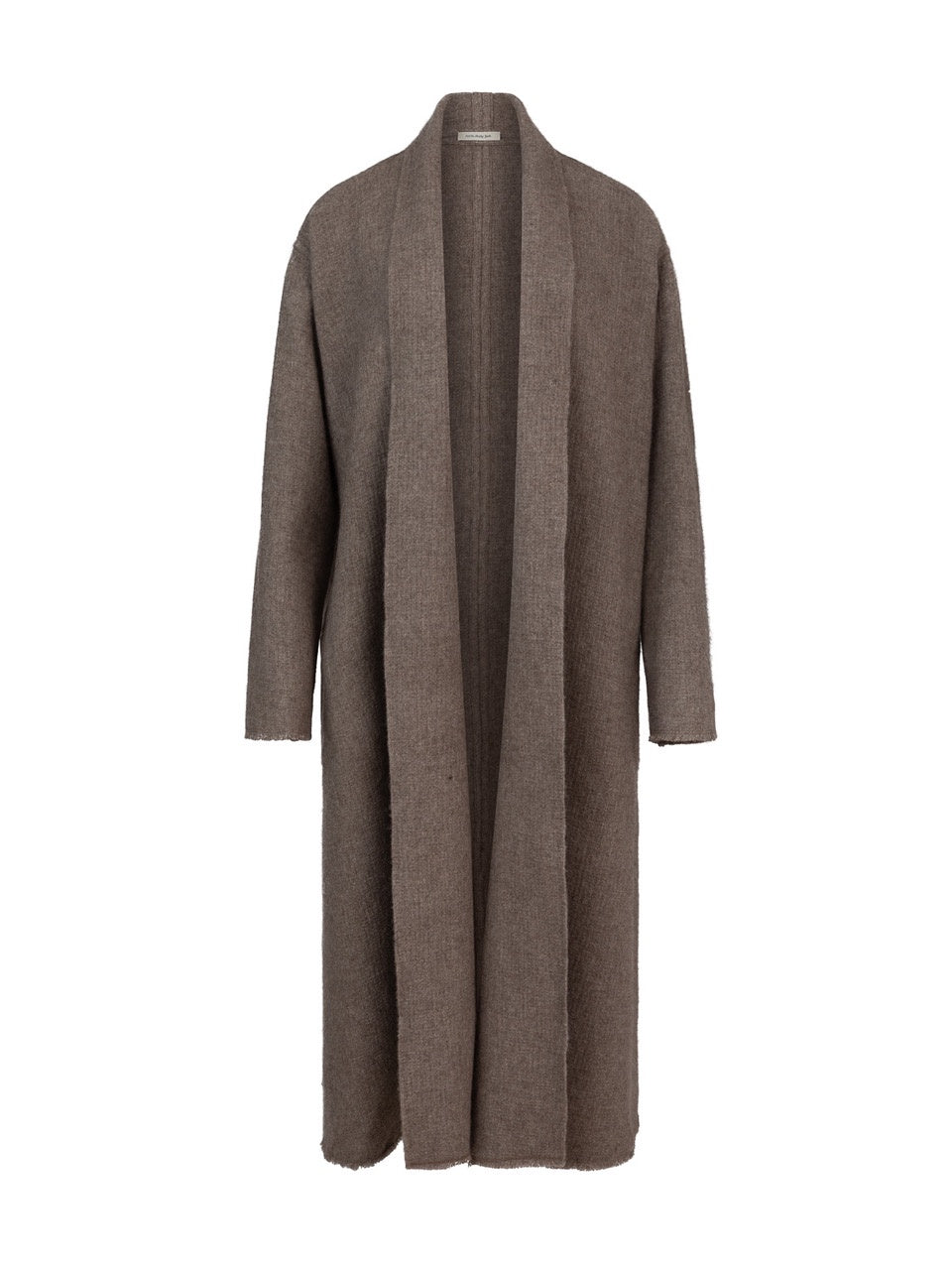
The Stephanie Yak Long Coat is the piece that most defines Marina Anouilh's alpine bohemian chic. 100% Mongolian yak wool, oversized cut, naturally sustainable — yaks shed their winter undercoat seasonally, no shearing required. In taupe or navy blue, it anchors a bohemian winter wardrobe the way a trench coat anchors a Parisian one. Worn open with the Lotus silk dress underneath, or belted over an Olympia kaftan and trousers, the Stephanie reads as both bohemian and architectural — which is precisely the balance the style demands at this latitude.
The Stephanie Coat in tartan olive check is the warmer-weather mountain version: structured wool, classic check, paired with a Babette knit bag and Meher Kakalia ballet flats it becomes a layered look that travels from a Saanenmöser breakfast to a Geneva dinner without rotation.
For the milder shoulder-seasons (early November, late March), the Marrakesh corduroy or denim jackets serve as outer layers on their own. The full yak coat appears only when temperatures stay below approximately 10°C.

Trousers, kaftans, and the question of bottoms
A bohemian chic outfit is built around its top half — the layers above the waist do most of the storytelling. Bottoms tend to be quieter: cropped linen trousers in the warm months, wool culottes in winter, a long kaftan dress like the Olympia or Laura for the days when separates feel like too much effort.
The Irene Shantung Moon Skirt is the formal-occasion bottom: ankle-length, panel-pleated, the kind of skirt that handles a wedding in Geneva and a sunset cocktail in Gstaad with equal ease. In layering terms, the Irene skirt sits at the boundary of mid-layer and bottom — worn over a long silk slip or under a kaftan dress, it can occupy either role.
For the most flexible bottom in the wardrobe, wool culottes in navy or charcoal — wide-leg, ankle-length, tailored just enough to hold their shape. They work under every outer layer in the wardrobe and read as polished alone indoors.
One rule for alpine bohemian chic
Never wear more than three textures at once. Silk, wool, and raffia is a complete vocabulary. Silk, wool, raffia, and leather is one too many. Silk, wool, and leather is fine because the textures stay legible. The eye should rest on each material in turn, not register a confusing surface.
This rule simplifies layering enormously. If you start with a silk shirt (base), add a wool culotte (bottom), and a leather boot (texture three), you have used your three textures. Adding a raffia bag pushes to four. Solution: replace the leather boot with a wool felt boot, freeing the raffia bag slot. The wardrobe forces editorial choices in real time.
Geneva spring — the layering formula
Geneva in April: morning temperatures around 8°C, afternoon up to 18°C, evening back to 10°C. The layering formula:
- Base: Holly silk shirt in olive
- Mid: Gaia linen coral embroidered jacket
- Bottom: linen culottes in cream
- Feet: Marrakesh ballet flats
- Bag: Tiana almond raffia bag
- Optional outer: Marrakesh corduroy jacket for early morning, removed by lunch
The Gaia jacket can be removed if the afternoon warms above 22°C. The Marrakesh corduroy goes in the bag for the evening cooling.
Gstaad shoulder-season — the layering formula
Gstaad in May or September: morning 6°C, afternoon 16°C, evening 8°C. The layering formula:
- Base: Holly silk shirt in cherry
- Mid: Marrakesh herringbone cotton jacket, beige or terracotta/turquoise
- Bottom: wool culottes in navy, OR linen culottes in olive if warmer
- Feet: leather ankle boots, low heel
- Bag: leather satchel for day, Tiana raffia for indoor
- Outer: Sophie Digard wool scarf for evening, optional Stephanie yak coat if temperatures drop further
St Moritz winter — the layering formula
St Moritz in January: morning minus 8°C, afternoon minus 2°C, evening minus 10°C. The layering formula:
- Base under-layer: fine merino t-shirt
- Base: Holly silk shirt in olive
- Mid: cashmere V-neck or Marrakesh velvet jacket
- Bottom: wool culottes in charcoal, lined
- Outer: Stephanie Yak Long Coat in taupe, belted
- Head: Madagascar leather hat or wool felt
- Hands: cognac leather gloves
- Feet: tall leather boots, lined, with cashmere socks
- Bag: leather satchel; Olivia Dar sequin pouch for indoor evening
Packing for a Swiss week
For a five-day stay across Geneva, Gstaad, and St Moritz: one Stephanie yak coat (outer), one Marrakesh jacket (mid), two silk shirts (base), one linen kaftan (versatile), one wool culotte, one Irene skirt, one Tiana raffia bag, one Olivia Dar evening pouch. Everything mixes. Nothing repeats obviously.
That is the bohemian chic packing list — built for layering, built for the Swiss climate, built for women who don't want to be photographed in the same outfit twice but also don't want a wardrobe full of single-wear pieces. See our complete bohemian chic carry-on capsule guide for the full travel methodology.
FAQ
What if the temperature swings more than 15°C in a day?
That is exactly the climate this wardrobe was built for. Use three-layer logic: silk base (stays on all day), mid layer (worn morning and evening, removed during peak warmth), outer layer (worn for arrival and departure, packed away during the day). Geneva and Gstaad both regularly see 15-20°C swings; the wardrobe handles them.
How do I avoid bulk when layering?
Avoid heavy cotton mid-layers (chunky knits, heavy sweatshirts). Stick to silk, linen, fine wool, fine cashmere. The bohemian chic register uses many layers but each one is thin. The total volume stays moderate.
What about humid hot climates?
Reduce to two layers: silk shirt + linen mid-layer or kaftan. Drop wool entirely. The Olympia Fuji Kaftan worn alone over a Holly silk shirt handles humid Mediterranean afternoons better than any single-layer alternative.
How do I layer for pregnancy?
The fluid silhouettes accommodate beautifully across all trimesters. Avoid belts at the natural waist; let the kaftan or coat hang open. The silk shirt knotted loosely above the bump rather than tucked in. The wardrobe is more pregnancy-friendly than most luxury contemporary because nothing is structurally fitted.
Closing
Alpine bohemian chic layering is the part of the Marina Anouilh wardrobe that no other luxury boutique offers in quite the same way. The combination of silk base, hand-embroidered mid-layer, and yak outer is built for a Swiss climate but works anywhere with seasonal swing. The pieces combine because they were designed to. Once you understand the base-mid-outer logic, the wardrobe assembles itself.
Browse the Bohemian Chic collection, see our winter alpine layering guide, or book a personal styling appointment.
Continue reading — the bohemian chic edit
If this guide is useful, the rest of the cluster goes deeper on related questions: how Marina wears the style, the craft behind it, the fabric glossary, and the seasonal edits.
- bohemian chic for winter
- bohemian chic in summer
- layering guide
- fabric glossary
- bohemian chic after 40
You can also browse the full bohemian chic collection, or book an in-store appointment at our Gstaad or St Moritz boutiques to be styled in person.